Who was Mildred Berryman?
Learn about our organization’s namesake — a pioneering sexologist, gemologist, herpetologist, photographer, musician, and human.
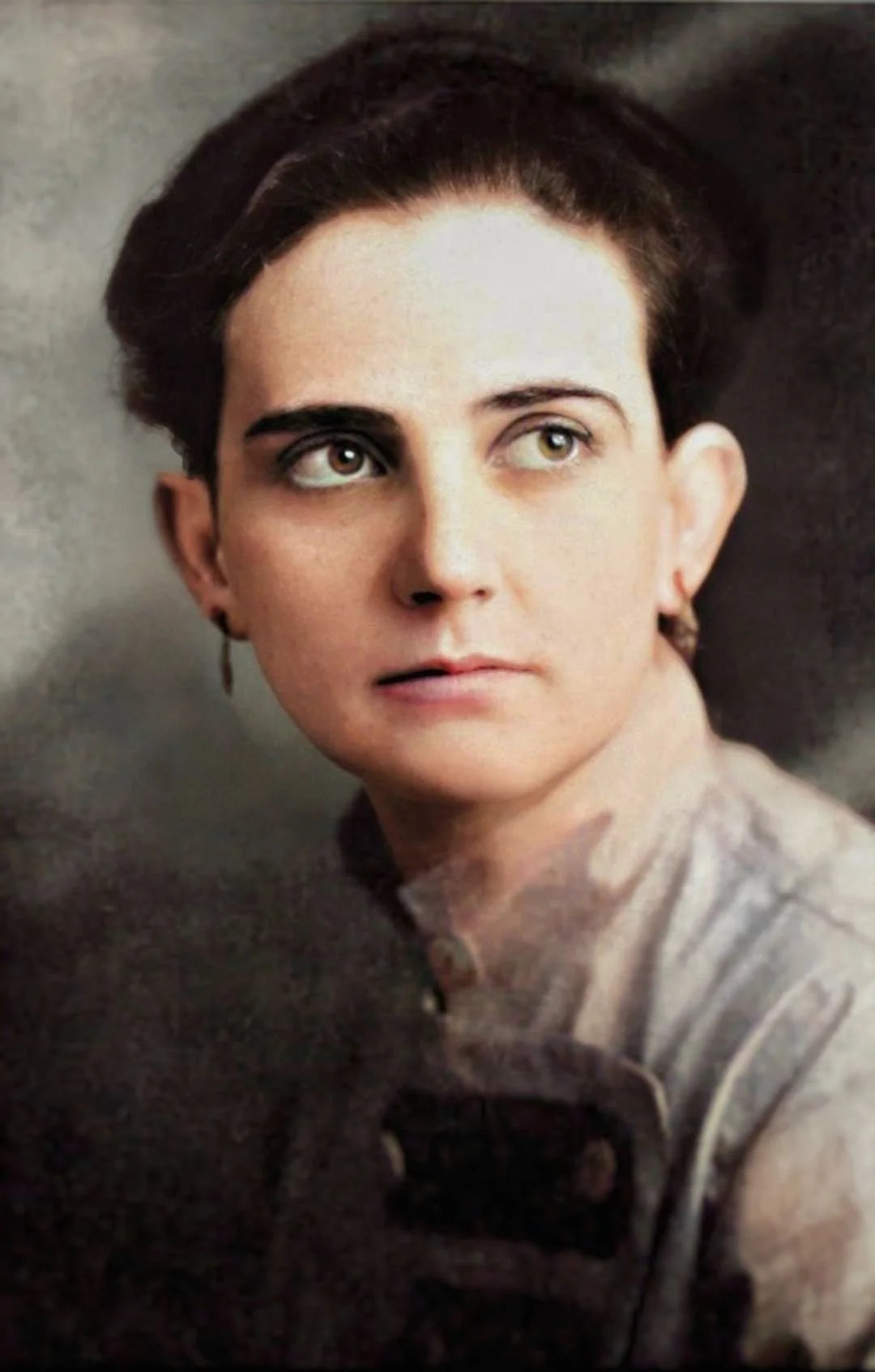
Mildred Berryman in a colorized photo, likely taken by her in her photography studio c. 1930. Image courtesy Utah Historical Society.
Mildred “Barrie” Berryman (1901-1972) Berryman came out of the closet in 1916 while attending high school at Westminster (now University). She was expelled from her dorm and the campus after the parents of other students threatened to withdraw their daughters from the school. Mildred later wrote that "she was shocked by the discovery" of her homosexuality and "did everything to break from the attraction for other girls" and she also felt "deeply humiliated and disgraced by it". She even married a man briefly but was disgusted by sex with him. In 1920, she met her first lover, a music teacher named Mae Anderson but "then through [Mae’s] jealousy, they became estranged".
She and Edith Chapman then became lovers about 1924 and soon Mildred moved into Chapman’s boarding house at 615 East 900 South. Even though their relationship did not last long, Mildred boarded with Edith and other Lesbians for some four years, before returning to her father’s home just up the street at 412 East.
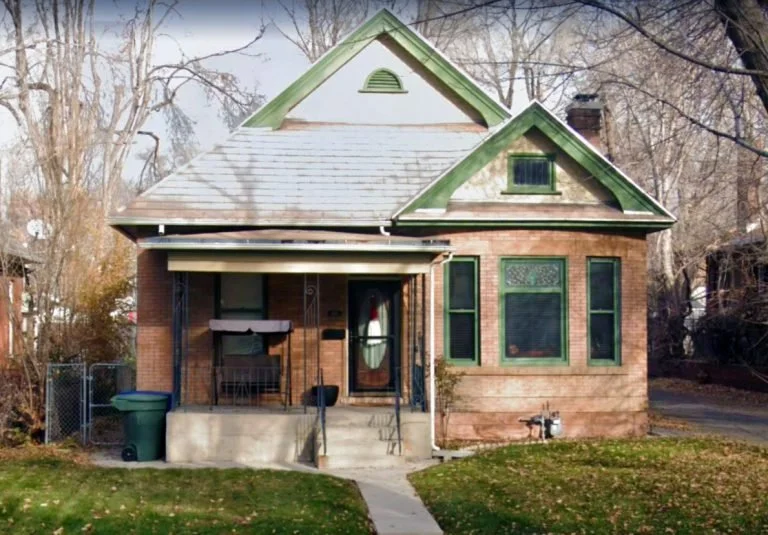
The Edith Chapman lesbian boarding house in downtown Salt Lake City, 615 E 900 S. Image courtesy Google Maps.
Having read pioneering sexologists like John Addington Symonds and Havelock Ellis, Mildred decided to begin a psychological study of 24 Lesbian friends and 9 Gay men here in Salt Lake City in the 1920s, early 30s. As far as we know, no one had ever attempted such a study of Lesbians before.
Mildred’s father and brothers were photographers, so while working as a stenographer, she began learning photography as well and became quite good.
By 1938, Lucile Olsen became Mildred’s lover and she too moved into the Berryman home at 412 East 900 South. In May 1940, Mildred and Lucile, aided by a Navajo-Diné guide, went hiking at Stansbury Island. There, they encountered three gopher snakes: two males and one female. While the female remained completely passive, the two males engaged in combat, apparently to gain access to the female. However, as the combat continued, the two male snakes began to engage in sexual actions with each other and left the female alone. Mildred reported full details to Dr. Angus M. Woodbury, who published their discovery of male homosexuality among gopher snakes in 1941 and 1951.
In 1942, while working at a small arms defense plant at Hill Air Force Base, Mildred met Ruth Uckerman Dempsey, a Mormon housewife from Beaver, Utah, who was working at the same plant. They fell in love and Ruth abandoned her three children to move in with Mildred in Woods Cross. They ran Mildred’s mineralogical business from their home and later opened Berryman Novelty Manufacturing, making fake Indian jewelry for tourists, plastic costume jewelry, ribbons for fairs, trophies, etc. They were both very active in women’s business clubs and Bountiful Community Church.
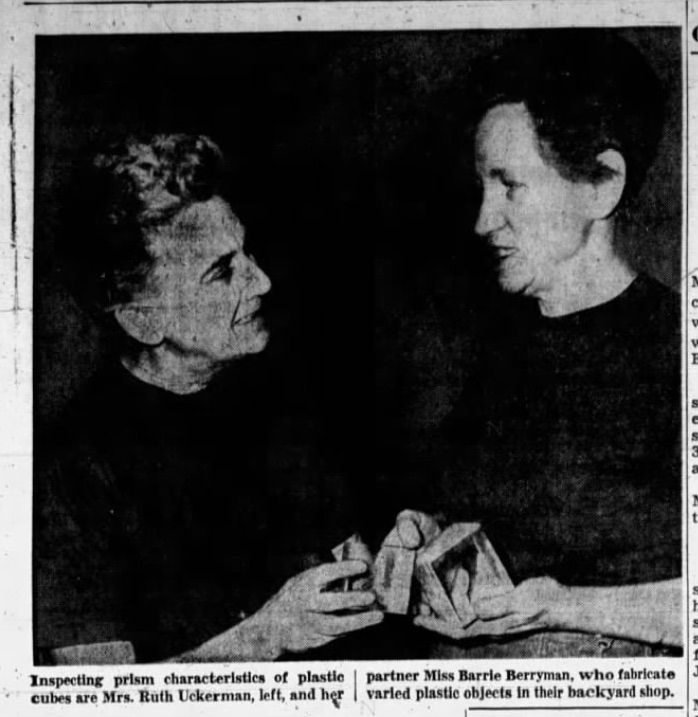
Berryman (left) and Uckerman, partners in a mineralogical business and later on, Berryman Novelty Manufacturing. Image courtesy Utah Digital Newspapers.
In October 2025, the Mildred Berryman Institute held a grave marking ceremony at the site of Berryman’s grave in Bountiful. It was a beautiful service that honored her legacy of scholarship, curiosity, pride, and honesty.
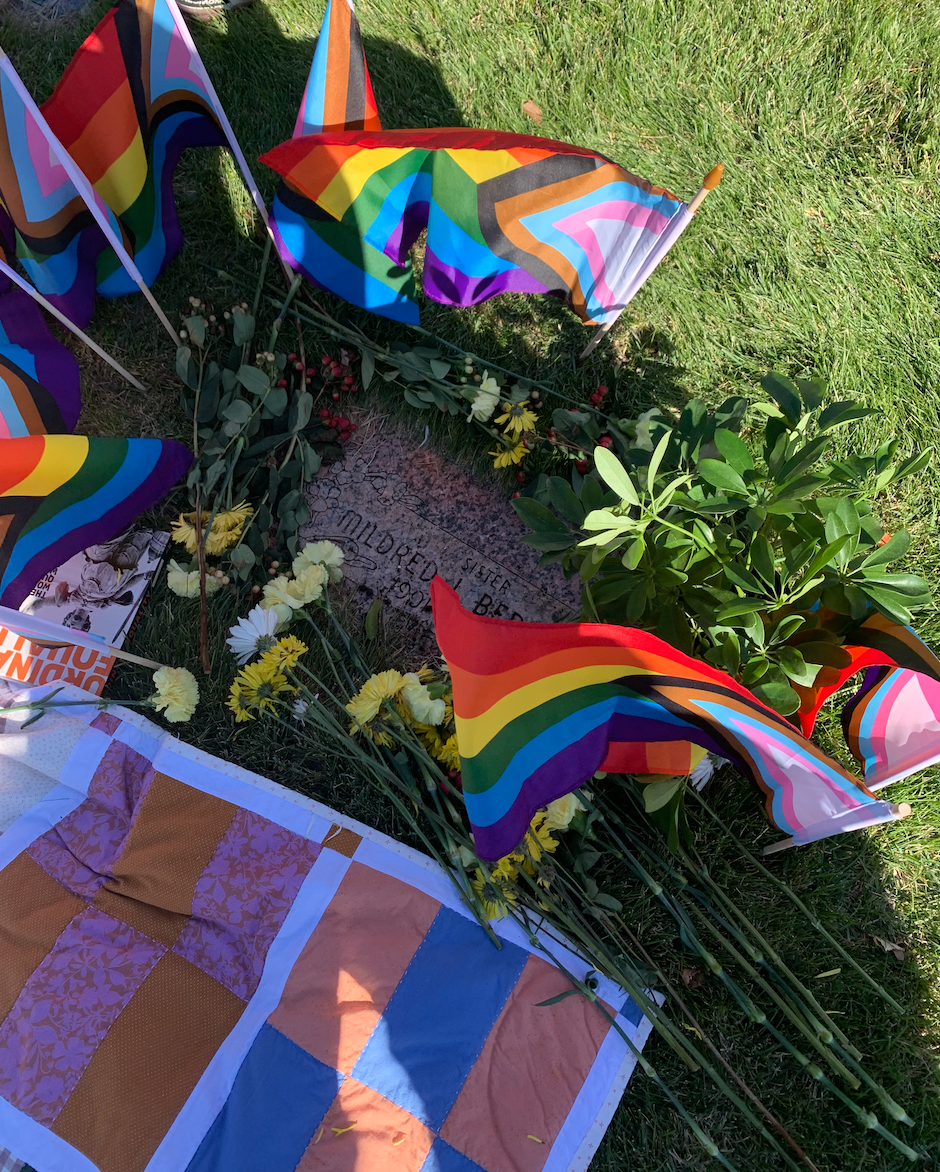
Berryman grave marking, October 2025. Image courtesy Megan Weiss.