Joe Redburn: The Father of LGBTQ+ Utah
Joseph Willis Redburn (1938–2020) is a foundational yet largely forgotten architect of Utah’s LGBTQ+ community. As a pioneering talk radio host and the owner of the legendary Sun Tavern, Redburn—the “father of LGBTQ+ Utah”—shaped the state’s queer public life in the wake of Stonewall. Redburn’s history reveals a throughline of social and institutional fragility of early LGBTQ+ organizing in the Intermountain West. Redburn’s life parallels community triumphs, structural failures, and generational erasures.
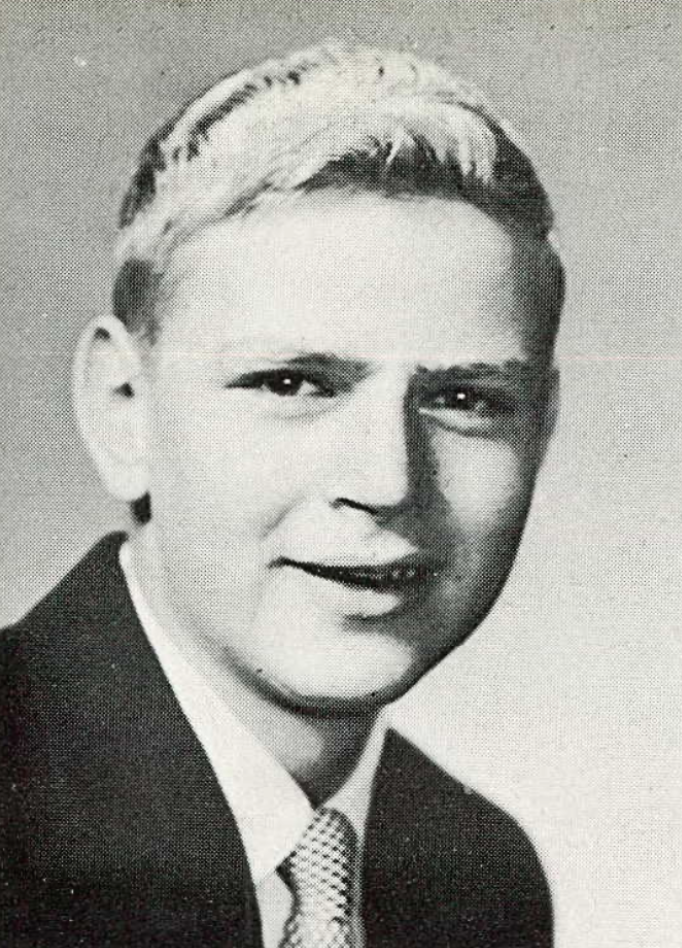
Redburn as a young man.
Joseph Willis Redburn was born in Laramie, Wyoming on the seventeenth of November 1938 to Elmer Willis Redburn (1899 - 1990) and Gerda Martina Redburn (1907 - 1985). Joe attended Laramie High School and was later enrolled at the University of Wyoming in 1957. Joe did not graduate from the University of Wyoming, leaving after three semesters. His last semester was Fall 1958, his sophomore year. He stayed in Laramie for a few more months while working at his alma mater high school and before he enlisted in the U.S. Army in 1959. “In those days,” he would later confess, “if you checked the box that you were gay, they rejected you, so I didn’t. I went in actually lying to them.”
In March of 1962, Joe began training at the Army Information School at Fort Slocum, New York. In December of the same year, Joe was promoted to sergeant and stationed at Fort Riley, Kansas where he was the broadcast manager over the Fort’s regional radio and television programs and led information classes for other officers. When Joe received his honorable discharge in 1963, he was twenty-four years old. Joe had hoped to move to Los Angeles like many Gay men were doing in the 1960s, but he would follow an Army friend, Neil Barclay, to Salt Lake City where he was connected with work at a radio station.
Finding His Voice
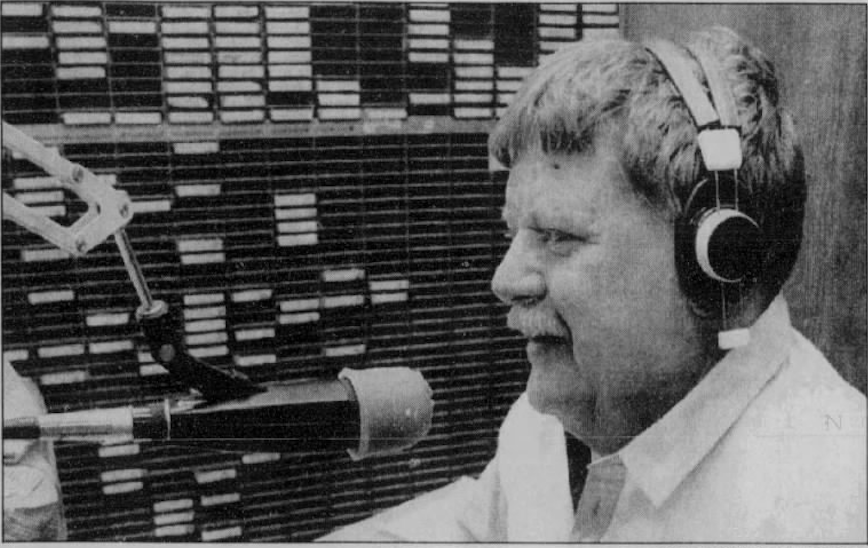
Redburn on FM station KTKK doing his show, “K-Talk.” Courtesy Salt Lake Tribune via Utah Digital Newspapers.
Joe Redburn’s radio career became central to both his public influence and his political transformation. After moving to Salt Lake City in 1963, he became an announcer at KSXX (“K-S-Double”) and quickly pushed the station beyond music programming toward two-way talk radio. By 1965, he was hosting Controversy, an hour-long call-in show that addressed politics and community issues, helping popularize talk radio in Utah. Redburn identified as a “Goldwater conservative,” but the frequent engagement with callers who challenged his views forced him to confront perspectives beyond his own.
As the Viet Nam War escalated, Redburn’s worldview continued to shift. Influenced by anti-war activists, university students, and fellow broadcasters, he became deeply involved in peace organizing and protest politics. Viet Nam became a central topic on his shows, and Redburn later described the anti-war movement as the most transformative force in his political life. His radio platform evolved into a space for dissent, community organizing, and political mobilization, including advocacy around civil rights, youth issues, and restrictive Utah liquor laws.
Throughout the 1970s, 1980s, and early 1990s, Redburn remained a prominent radio personality across multiple stations, including K-TALK (later KTKK), KUER, KCGL, KPCW, and KWUN. He brought lesbian, gay, and bisexual voices onto the air at a time when such representation was rare, using radio as an early tool of visibility and political engagement. His progressive views drew admiration and backlash. Joe was dismissed from KTKK in 1993, an action he believed was tied to his openness about being gay and his liberal politics in an increasingly conservative media environment. His time on the airwaves laid the groundwork for later LGBTQ+ media activism in Utah and solidified his role as a bridge between political radicalization, public dialogue, and queer visibility.
The Sun Tavern and the Power of Place

The original Sun Tavern
In 2008, Joe recalled nervously opening the Sun Tavern (400 West and South Temple in Salt Lake City) at noon on 20 February of 1973:
“The Sun Tavern had been the Railroad Exchange, and I found it because that’s where the anti-war people hung out. It was owned by a former Pittsburgh Steeler, and they had a sign outside – it was a Pepsi sign that said Railroad Exchange. And I changed it to say The Sun Tavern. I can remember a guy who had a bar just south who said, ‘You can’t do that! The gay bars can’t have signs!’ And I said, ‘Well, I’m gonna do it, anyway.’ That’s what got me, how oppressed this community was. We were oppressing ourselves. We didn’t think we could put a sign in front of a gay bar.”
Joe successfully and intentionally was able to show others in the state that they could organize and become visible in the process. Joe named the bar after the Midnight Sun, a new gay bar in San Francisco’s Castro District (originally at 506 Castro Street, now at 4067 18 th Street). With several gay and lesbian businesses in the historic West Side, other bars, clubs, restaurants, and community centers began to establish themselves nearby as an escape from downtown where Gay bashings and harassment were common, and where the police participated in intimidation or turned a blind eye to it. The Sun Tavern was displaced to make way for the Delta Arena and, in 1983, moved to 727 West 200 South.
The magic of “The Sun” was by no means a mistake. Redburn wanted to bring the bars and dance clubs of San Francisco and New York City to the Beehive State. Nikki Boyer reminisced that The Sun “… had the first disco ball, the first live DJs. … It was about all the freedom we had there. It was a good time. It was a great time,” earning itself the nickname “The People’s Bar.”
In a later conversation, Boyer recalls the floor of the Sun Tavern bouncing and heaving from the over-capacity dancing. Staff and Redburn wondered which would happen first: would they all would fall through the floor or be struck down by lightning? The Sun Tavern was internationally known, revered, and had celebrities routinely patronizing (like the Osmonds every Saturday and closeted A-List celebrities), and became the biggest and best Gay bar in the west—though Joe was emphatic the bar was for everyone.
Joe opened up The Trapp in 1991 and sold it a few years later. When the 1999 tornado destroyed the second location of the Sun Tavern, the owners of The Trapp changed the bar’s named to “The Sun Trapp” to honor the legacy of Redburn and his Sun Tavern. The damage brought on by that tornado was too substantial for Joe to repair. Joe decided not to re-open the location, ending the 26 year-long chapter of the Sun Tavern. By the end of the twentieth century, well over thirty bars, clubs, shops, bath houses and community centers had existed or were still operating out of this area—including his Sun Trapp.
The Sun became much more than a bar. It was a refuge, a community hub, and a cultural landmark. With DJs, dancing, and an unapologetic sense of joy, it offered a glimpse of queer life lived openly. For countless patrons, it was the first place they realized they were not alone. The Sun also helped anchor a growing LGBTQ+ presence on Salt Lake City’s west side, inspiring nearby businesses, organizations, and gathering spaces. Its influence rippled outward for decades.
Final Years
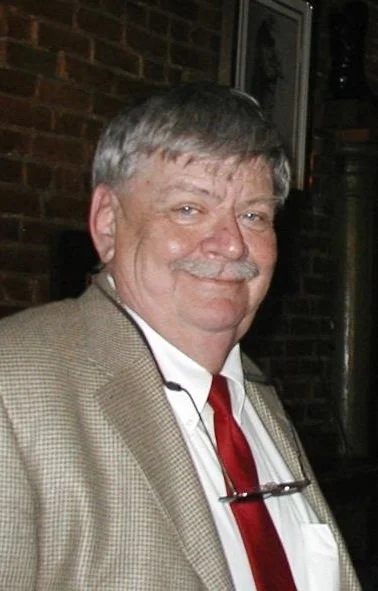
Joe receded to the background of Salt Lake City Gay life and culture following the closure of his Sun Tavern. In 2018 and 2019, close friends recount his social media presence ceasing completely; this is likely when Joe’s dementia set in. The father of LGBTQ+ Utah became homeless.
In September of 2020, Joe was found unresponsive at the South Salt Lake Men’s Resource Center. Joe has no gravesite to visit. A few local gay men intervened to ensure he received the respect and dignity in his afterlife care. Though seemingly forgotten, the shadow of Joe’s legacy is seen across Utah.